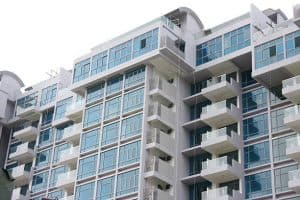
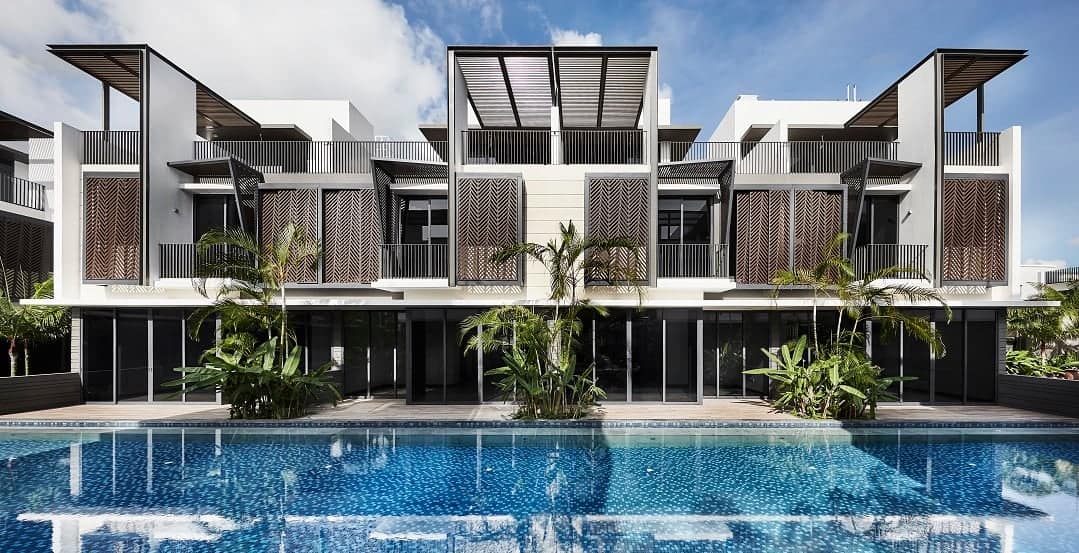
A cluster house in Singapore is a hybrid between a landed home and a condominium. You get multiple floors, private parking, and shared facilities like a pool or gym — all under a strata title.
In 2025, cluster housing is gaining popularity among buyers who want space without the full cost of landed property. But with rising mortgage interest rates in Singapore, it’s important to understand what you’re buying.
This guide explains what cluster houses are, how they work, current prices, pros and cons, and how to finance one with the right home loan in Singapore.
What Is a Cluster House & How Does It Work?
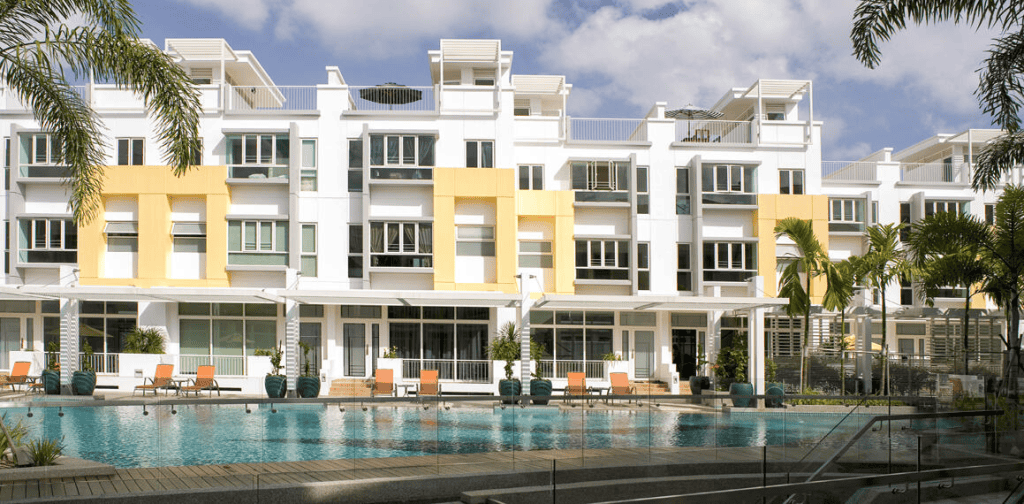
If you’re looking for a home that offers the spaciousness of a landed property and the facilities of a condo, a cluster house in Singapore might be exactly what you need.
In 2025, more buyers — especially families and upgraders — are choosing cluster homes as a practical alternative to shrinking condo units and increasingly expensive landed homes.
What’s the definition of cluster housing in Singapore?
A cluster house is a strata-landed property — meaning:
- You own the house (usually 2–3 storeys, with private parking)
- But share the land and facilities with your neighbours
- It’s governed like a condo under a Management Corporation Strata Title (MCST)
URA defines cluster housing as landed housing within a gated community, with shared recreational facilities and common property.
You pay monthly maintenance fees, just like a condo, but enjoy landed-style privacy and space.
How is it different from condos and landed homes?
Before deciding if cluster housing is right for you, it helps to compare how it stacks up against condominiums and landed properties in Singapore in terms of space, ownership, and lifestyle.
Cluster House vs Condo vs Landed Property in Singapore (2025 Comparison Guide)
| Feature | Cluster House | Condominium | Landed Property |
|---|---|---|---|
| Land Ownership | Shared (Strata Title) | Shared (Strata Title) | Full ownership |
| Private Parking | Yes (typically 1–2 lots) | Usually shared basement | Yes (private car porch) |
| Facilities | Yes (pool, gym, BBQ) | Yes | No |
| Maintenance | MCST-managed | MCST-managed | Self-managed |
| Rebuild Allowed | No | No | Yes |
| Privacy Level | High | Medium | Very High |
| Resale Demand | Moderate to High | High | High (but less affordable) |
💡 Tip: If you’re looking for a balance of privacy, shared facilities, and less hassle maintaining the property, cluster houses strike that middle ground — and are often eligible for attractive mortgage loan rates in Singapore.
Why are more families and investors buying them in 2025?

- More livable space than typical condos
- Family-friendly gated environments
- Cheaper than landed homes in prime areas
- Eligible for private property loans and CPF use
With rising home loan interest rates in Singapore, many are turning to cluster homes as a practical investment — and using our mortgage loan calculator to plan affordability early.
Pros and Cons of Cluster Living

Buying a cluster house in Singapore comes with real benefits — but also a few trade-offs. In 2025, more families and upgraders are eyeing this property type, especially as housing loan interest rates rise and space becomes more valuable.
Here’s what to consider before making your move.
What are the main advantages (space, privacy, facilities)?
A cluster home offers the best of both worlds — landed-like space, condo-style convenience:
- Multi-level living: Most units span 2–3 storeys with 4+ bedrooms — perfect for families or work-from-home needs.
- Private car porch & entrance: No shared lift lobby or corridors.
- Full facilities: Pools, gyms, BBQ pits, and playgrounds — great for kids and weekend hosting.
- Low upkeep: MCST handles common areas and external maintenance.
- Financing flexibility: Eligible for CPF and all major mortgage loans in Singapore, including DBS home loan, UOB home loan, and OCBC housing loan.
💡 For buyers comparing landed vs condo, cluster homes often strike the perfect middle — more space, less maintenance, and still bank-financeable.
What limitations or drawbacks should you know?
While cluster housing has its perks, it’s not without limitations — especially if you value freedom over structure:
- Strata title: You don’t own the land itself — the entire estate is managed under strata rules.
- Limited renovation freedom: External changes require MCST approval (e.g. extensions, façade changes).
- Monthly maintenance fees: Just like a condo, expect to pay $250–$600/month depending on the project.
- Resale appeal still growing: Not all buyers fully understand cluster living, which may affect resale demand and price growth.
🧠 If you’re planning long-term occupancy, cluster homes are great. But if you’re aiming for en-bloc or rebuild potential, you may be better off comparing options like a true private property loan for landed homes.
Pros and Cons of Cluster Houses in Singapore (2025)
| Pros | Cons |
|---|---|
| Spacious layouts with 2–3 storeys | No full land ownership (strata title only) |
| Condo-style facilities: pool, gym, security | Monthly MCST fees required |
| Private entrance and car porch | Limited renovation control |
| CPF & bank loan eligibility | Resale market less liquid than condos/landed homes |
| Lower entry price vs landed property | Not suitable for buyers wanting rebuild potential |
Who is a cluster house most suitable for?
Cluster homes are best for buyers who want space and privacy, but also appreciate shared amenities and lower maintenance stress.
✅ Ideal for:
- HDB or EC upgraders looking for more room and lifestyle perks
- Young families who value gated security and facilities
- Multi-gen households wanting vertical space and semi-independence
- Buyers comparing best home loan rates in Singapore under $3M
🚫 Less suitable for:
- Buyers who want to rebuild or control land usage
- Investors targeting high-yield or capital upside
- Owners who dislike shared MCST governance
🎯 If you want a spacious, family-friendly home without the hassle of full landed ownership — a cluster house could be the ideal upgrade in 2025.
How Much Do Cluster Houses Cost in 2025?

As of mid-2025, cluster houses in Singapore typically cost between $1,300 to $1,800 per square foot (psf) — depending on location, age of the project, and land tenure. This positions them as more affordable than landed homes, but pricier than most condos on a per-square-foot basis.
If you’re looking at home affordability, understanding psf trends is just as important as comparing home loan rates in Singapore.
Average psf prices across Singapore districts (Bukit Timah, Serangoon, Yio Chu Kang, etc.)
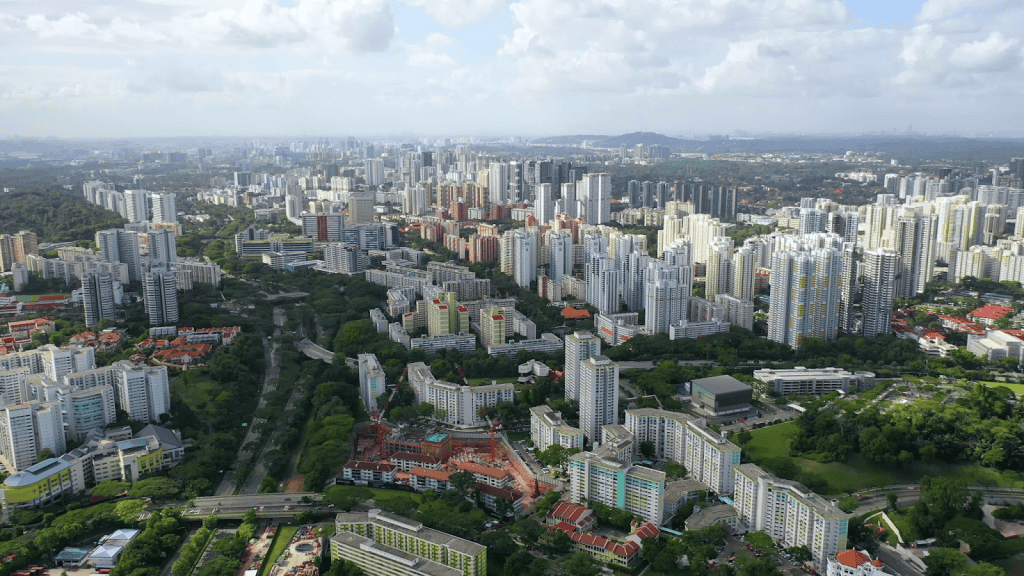
Here’s what you can expect to pay for a cluster house today, based on district:
- Bukit Timah / Sixth Avenue:
$1,700–$2,000 psf — Freehold cluster homes in prime landed enclaves - Serangoon / Lorong Chuan:
$1,400–$1,700 psf — Popular with families for its schools and central access - Yio Chu Kang / Upper Thomson:
$1,300–$1,500 psf — Spacious, quiet, and often undervalued compared to nearby condo prices - Hougang / Punggol:
$1,100–$1,300 psf — Leasehold projects with newer builds and more affordability
💡 Prices vary by tenure and layout. Use our mortgage loan repayment calculator to check monthly affordability before committing.
How do cluster house prices compare with condos and landed properties?
If you’re deciding between a cluster house, a private condo, or a landed property, it’s not just about psf — it’s about space, value, and entry price.
2025 Cluster House Price Comparison vs Condo and Landed Property in Singapore
| Property Type | Average PSF | Typical Size | Estimated Entry Price |
|---|---|---|---|
| Cluster House | $1,300–$1,800 | 2,000–3,500 sq ft | $2.2M–$3.5M |
| Private Condo | $1,900–$2,400 | 900–1,500 sq ft | $1.6M–$2.8M |
| Landed Property | $2,000–$3,200 | 3,000–6,000+ sq ft | $3.5M–$6M+ |
🧠 Cluster homes often provide more liveable space per dollar than new launch condos, with far less maintenance than landed homes. If you’re budgeting carefully, compare private property loan options to stretch your financing efficiently.
What affects the price: tenure, location, age of project
Several factors influence the cost of a cluster house in Singapore:
- Tenure: Freehold cluster homes command higher psf and better resale value
- Location: Central or city-fringe homes (like Bukit Timah) are priced higher than OCR projects
- Age of Project: Newer developments (built after 2015) offer modern layouts and better facilities
- Developer Reputation: Projects by developers like Far East or CDL often carry a price premium
- Layout & Orientation: Corner units, north-south facing homes, and those with fewer shared walls tend to fetch more
🔗 Planning to finance a purchase soon? Start by comparing the best mortgage loan rates in Singapore to lock in your ideal package.
Buying a Cluster House: What to Watch Out For

Before you commit to buying a cluster house in Singapore, it’s important to understand how it differs legally and structurally from landed or condo properties.
Ownership rules, renovation limits, and future resale potential can all impact your decision — especially in 2025, where home financing is more tightly regulated.
What are the ownership and legal rules (e.g. strata title, shared land)?
Cluster houses fall under strata landed housing, which means:
- You own the house, but not the land beneath it — the land is shared among all owners in the development.
- The estate is governed by a Management Corporation Strata Title (MCST) — similar to a condo.
- You’re responsible for your unit’s interior, while external upkeep (roofs, façade, shared roads) is handled collectively.
Unlike full landed homes, you can’t make unilateral decisions about common areas or rebuild your unit. You’re also required to pay monthly MCST maintenance fees, which can range from $250–$600 depending on size and facilities.
🔗 Learn more about financing under private property loan schemes in Singapore.
Can you renovate or rebuild a cluster home?
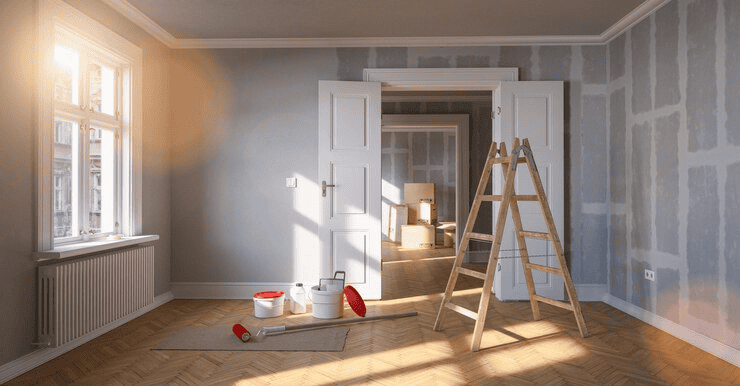
Interior renovations are generally allowed — think kitchen upgrades, flooring, toilets, partitions, etc.
However, external modifications are limited:
- No changing the building height or structure
- No extensions, awnings, or facade works without MCST and URA approval
- No individual rebuilding — even if the unit is aging or needs a major refresh
⚠️ Unlike full landed property, cluster homes are bound by shared building plans and guidelines. You’ll have less design freedom — but also fewer structural responsibilities.
Are there any resale or en bloc risks?
While cluster homes are gaining popularity, the resale market is still less active than for condos or landed properties. Why?
- Many buyers still don’t fully understand what a cluster house is
- Strata ownership and shared rules can feel restrictive to traditional landed buyers
- Supply is limited — which helps value, but also limits liquidity
As for en bloc potential — it’s rare. Cluster homes are low-density and typically located in landed zones, making redevelopment harder under URA zoning rules.
💡 If you’re buying with resale in mind, consider newer cluster projects in central areas (like Bukit Timah or Serangoon) with modern layouts. Use tools like our BSD stamp duty calculator to estimate transaction costs upfront.
Should You Buy a Cluster House or Look Elsewhere?

Cluster houses sit in a unique spot on Singapore’s property spectrum — not quite landed, not quite condo. So the key question isn’t “Is it good or bad?” It’s “Is it right for you?” Let’s break down when cluster housing makes sense — and when you might want to look elsewhere.
When is a cluster house a smart buy?
A cluster home can be a great choice in these scenarios:
- You want more space than a condo but not the high cost of landed
- You prefer a gated community with facilities, especially for young kids or elderly parents
- You value low-maintenance living — without worrying about roof leaks or garden upkeep
- You’re comparing home loan interest rates in Singapore and want better value per square foot
🧠 If you’re a first-time upgrader from HDB or EC, cluster housing can feel like a huge lifestyle upgrade without the stress of full landed ownership.
Situations where it might not suit your lifestyle or budget

Cluster homes are not ideal if:
- ❌ You want to rebuild or significantly modify your house in future
- ❌ You dislike shared management or MCST rules
- ❌ You’re banking on fast capital gains or high resale liquidity
- ❌ Your monthly budget is already stretched — cluster homes come with MCST fees and larger loan quantum, which may not suit every housing loan in Singapore borrower
⚠️ If you plan to renovate extensively, or want full freedom over your land, you’re better off exploring true landed homes.
Alternatives to consider if cluster homes don’t fit
If you’re not fully sold on cluster living, here are some strong alternatives:
- Private condos: Lower entry price, wider resale market, more compact lifestyle
- Landed properties: Higher cost and maintenance, but full land ownership and rebuild freedom
- Executive Condominiums (ECs): For those still within income limits, ECs offer condo facilities at subsidised prices — and can be financed with a bank loan for HDB buyers
🔍 Still unsure? Use a mortgage calculator to compare affordability across property types.
Financing a Cluster House in Singapore

Cluster houses are classified as private residential property in Singapore. That means you’ll need to finance your purchase through bank loans, not HDB financing — and you’ll be subject to rules like TDSR and LTV limits. Here’s what to know before applying.
Can you use CPF and bank loans?
Yes — just like with a condo or landed home, you can:
- Use your CPF Ordinary Account for the downpayment and monthly instalments
- Apply for a bank loan from major lenders such as DBS, UOB, or OCBC
- Enjoy a max Loan-to-Value (LTV) of 75%, if you have no existing home loan
- Pay the remaining 25% with cash and CPF (min 5% must be in cash)
🔗 Learn more or apply through our private property loan portal for the most competitive bank packages.
How TDSR affects loan eligibility in 2025
Under the Total Debt Servicing Ratio (TDSR) framework:
- Your total monthly debt repayments (including this home loan) cannot exceed 55% of your gross monthly income
- This includes credit card bills, car loans, education loans, and any other liabilities
💡 If you’re self-employed or on variable income, lenders will apply a haircut — usually only 70% of your declared income is counted.
🔎 Want a deeper breakdown? Check out our full guide: What is TDSR in Singapore? Total Debt Servicing Ratio Explained
What loan options are best for cluster homes

Since cluster houses are private property, you’ll be comparing standard bank mortgage packages, including:
- Fixed rate home loans: Lock in interest for 2–5 years; great if you want payment certainty
- Floating rate loans: Pegged to rates like SORA — may be cheaper short-term but more volatile
- Hybrid loans: Fixed for a period, then floats — good for flexibility
You can choose to:
- Go direct to the bank
- Or work with a mortgage broker in Singapore to compare and negotiate multiple loan offers at once
📊 Bonus tip: Check for repricing or refinancing options after your lock-in ends. We help many clients refinance home loans in Singapore to get better rates after year 3.
FAQs About Cluster Homes in 2025

Still have questions before making a move? Here are the most common concerns buyers and investors ask about cluster houses in Singapore — simplified for 2025.
Are cluster houses considered landed property?
No — even though they look and feel like landed homes, cluster houses are legally classified as strata-titled private property.
That means:
- You don’t own the land your unit sits on
- The development is governed by a Management Corporation Strata Title (MCST)
- You share facilities, common areas, and pay monthly maintenance fees
🧠 If full land ownership and rebuild rights are key to you, compare financing options for a true landed property loan in Singapore.
Can foreigners buy or rent them out?

Generally, foreigners are not allowed to buy cluster homes — unless the development is located within an approved condominium project under URA guidelines.
However:
- Singapore PRs may be allowed to purchase, subject to LDAU approval
- Foreigners can freely rent cluster homes — and many do, especially in expat-heavy enclaves like Bukit Timah or Novena
🔗 Learn more or speak with a mortgage advisor in Singapore if you’re unsure about eligibility and financing restrictions.
Which is better: freehold or leasehold?
It depends on your goals.
Freehold cluster homes:
- Hold value better over the long term
- Appeal more to owner-occupiers and families
- Cost about 10–20% more than comparable leasehold options
99-year leasehold cluster homes:
- Lower entry price
- Typically newer (especially those built after 2015)
- Still qualify for full bank mortgage loans in Singapore
📌 If you’re holding for 10+ years or passing the property to the next generation, freehold makes sense. For shorter-term living, leasehold can be better value.
Quick Facts Checklist: Cluster Housing at a Glance (2025)
| ✅ Topic | 📍 Answer (2025 Update) |
|---|---|
| Ownership | Strata-titled (not full landed ownership) |
| Eligibility | Singaporeans & PRs (foreigners may need approval) |
| Financing | Bank loan + CPF eligible (no HDB loan) |
| Renovation Rules | Interior: OK. Exterior: MCST & URA approval required |
| Rental Allowed? | Yes — open to locals and foreigners |
| Land Tenure | Freehold or 99-year leasehold, depending on project |
| Facilities | Usually includes pool, gym, BBQ area, security |
Need Help Finding or Financing a Cluster Home?

Buying a cluster house in Singapore is a big move — not just in dollars, but in decisions. With so many variables (tenure, location, MCST rules, renovation limits), it’s easy to get overwhelmed or overlook hidden costs.
Here’s where the right help makes a real difference.
Why working with a mortgage broker makes a difference
Instead of going bank to bank, a mortgage broker helps you:
- Compare multiple loan offers side-by-side — across DBS, UOB, OCBC, and more
- Understand which packages fit cluster properties best (especially with bigger loan quantum and longer tenures)
- Avoid common traps like picking a floating rate that spikes mid-renovation
- Save time, money, and paperwork
🔗 Get started with a trusted mortgage broker in Singapore — free consultation, no hidden fees.
How to avoid overpaying or miscalculating affordability

Cluster homes aren’t cheap. You’ll likely be borrowing between $1.5M and $3M — and a small interest rate difference can cost you tens of thousands over your loan’s lifetime.
✅ To stay on track:
- Use a mortgage loan repayment calculator to estimate monthly instalments
- Don’t forget Buyer’s Stamp Duty (BSD) — a 4–5% cost that can’t be paid with your loan
- Compare best home loan interest rates in Singapore — especially if you’re choosing between fixed and floating options
💡 Affordability isn’t just about monthly payments — it’s about long-term planning. A good broker helps you see the full picture before you commit.
Links to useful tools and guides
Before you buy, check out these guides:
- ✅ Compare private property loans
- ✅ Estimate your monthly mortgage repayments
- ✅ Calculate Buyer’s Stamp Duty (BSD)
- ✅ Explore refinancing options if you already own a cluster home
At the end of the day, buying a home — especially a cluster house — isn’t just about property types or price per square foot.
It’s about making space for your future, your family, and your peace of mind.
If you ever feel unsure or just need a second opinion, know that you’re not alone. We’re just one message away — ready to help you make smarter, calmer, and more confident home decisions.